
Treatment-monitoring research · Chennai, India
See how cancer changes during treatment.
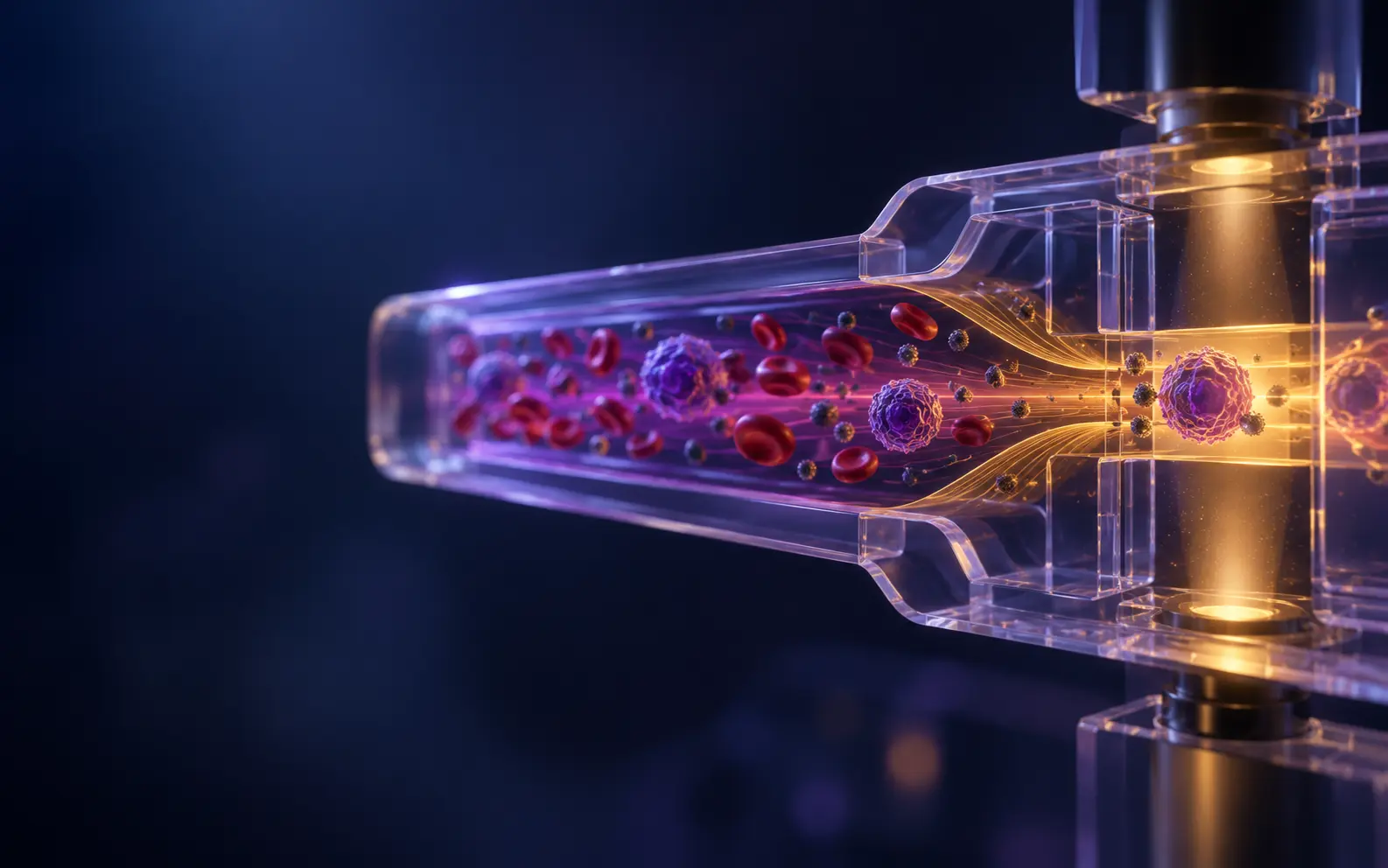
MIOPC™ is being developed to enrich, enumerate and image circulating tumour cells from serial blood samples—supporting research into treatment response and personalised cancer care.
Research use only · Clinical validation ongoing
India estimates, 2024 · IARC GLOBOCAN
After diagnosis
The question changes: is treatment working?
Imaging, pathology and clinical assessment remain essential. We are exploring whether CTCs—rare cancer cells shed into the bloodstream—can add a repeatable, cell-level research signal between standard evaluations.
Repeat sampling
Study change across treatment timepoints using a blood-based workflow.
Cell-level imaging
Preserve visual information for enumeration and downstream research.
Longitudinal comparison
Correlate CTC trends with established clinical findings—not replace them.
A research signal from the bloodstream
From one sample to a longitudinal view.
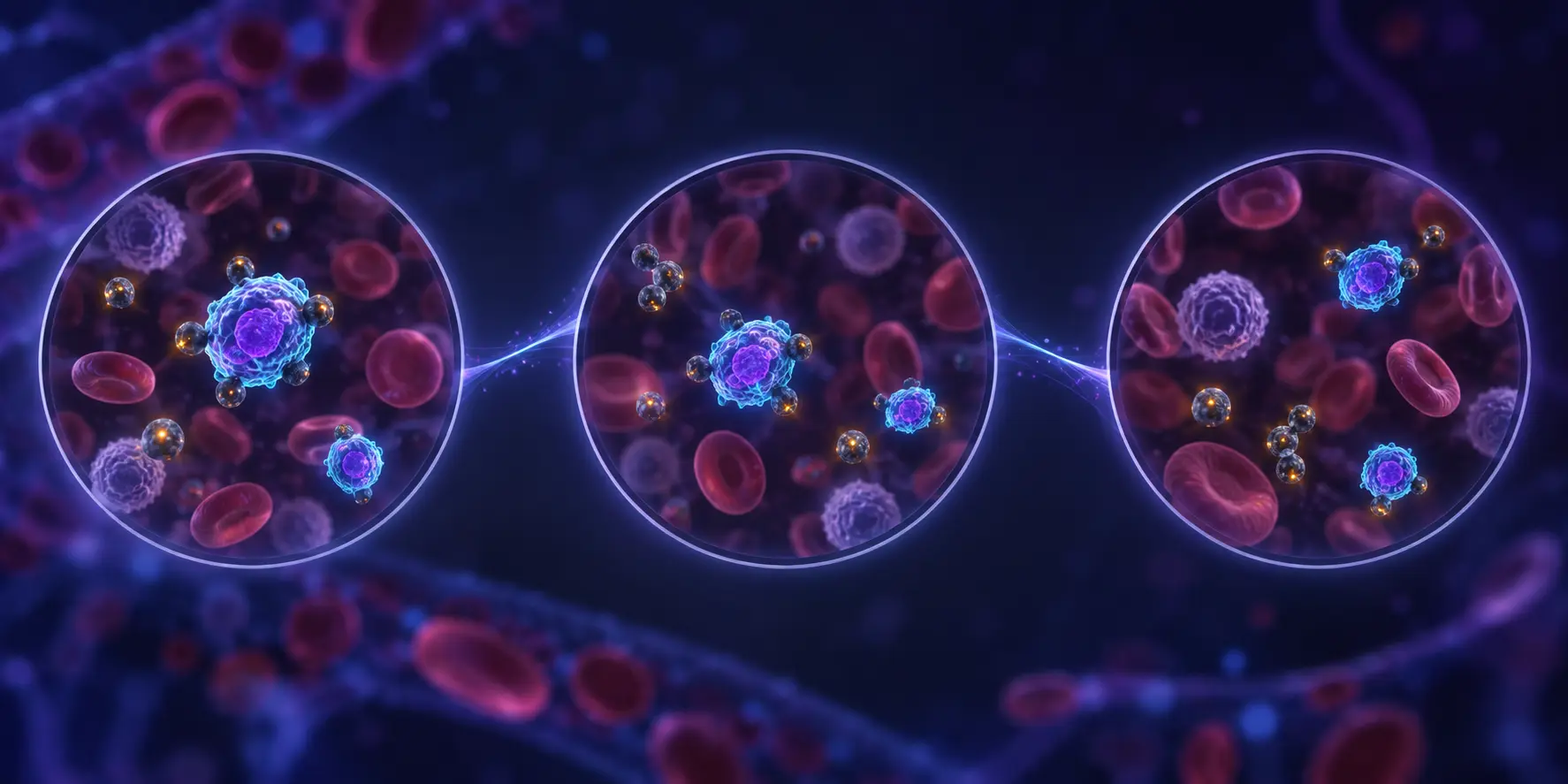
A CTC is a cancer cell found in the blood after separating from a primary or metastatic tumour. Serial CTC research can observe how counts and cellular features change over time.
Baseline
Collect a pretreatment research sample.
Follow-up
Repeat at defined treatment timepoints.
Enrich
Isolate rare cells using a microfluidic workflow.
Image
Enumerate and retain cell-level observations.
Correlate
Compare trends with clinical and imaging data.
MIOPC™ workflow
Four functions. One research platform.
The planned system brings sample handling, enrichment and observation into a compact microfluidic workflow.
Interaction
Guide the sample through controlled microfluidic paths.
Incubation
Support defined reagent–cell interaction conditions.
Isolation
Enrich target cell populations from a complex sample.
Identification
Enable imaging and enumeration for research analysis.
Preliminary analytical evidence
Measured recovery in controlled spiking studies.
Early immunomagnetic experiments provide a starting point for iteration. They are not measures of clinical sensitivity or patient outcomes.
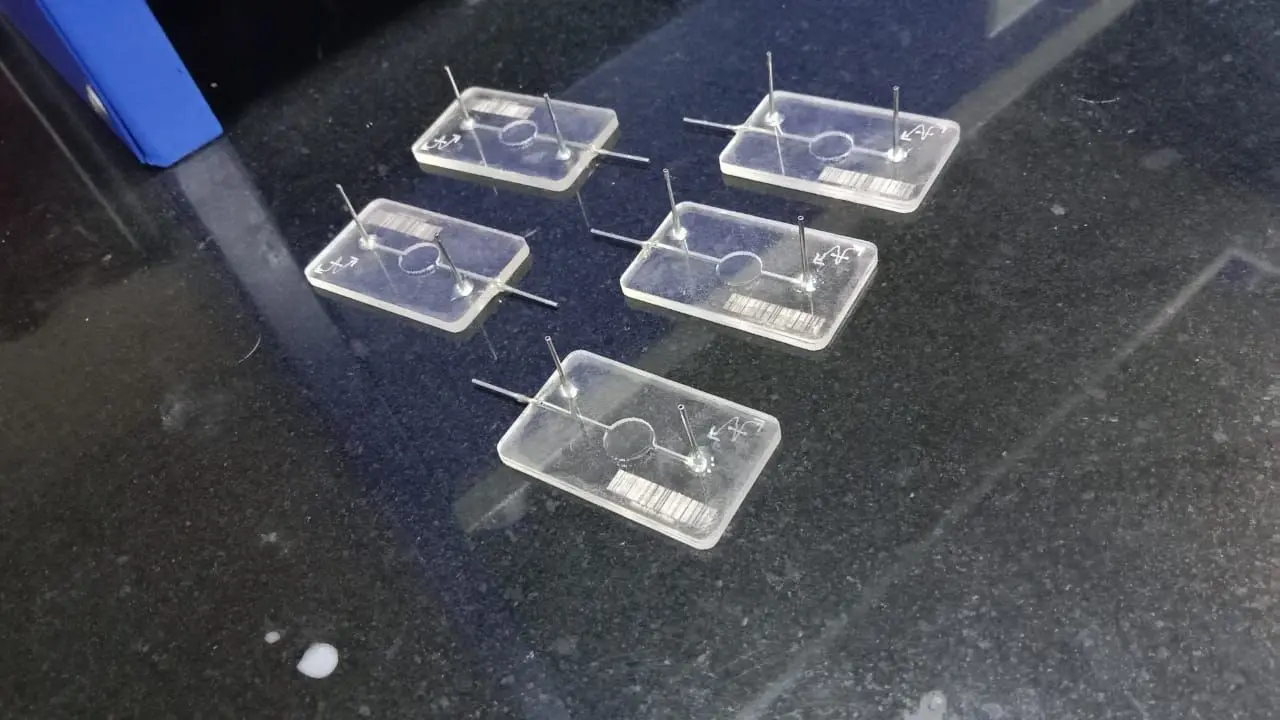
Microfluidic portfolio · fabrication service
From a research need to a measurable prototype.
We fabricate acrylic-based microfluidic devices that translate research and laboratory needs into practical prototypes for testing, measurement and iteration.
Explore our microfluidic chip services →Do you have a research need we can turn into a working microfluidic prototype?
Explore our chip formats and custom acrylic fabrication service.