Microfluidic chips

Start standard. Go specialised when the biology demands it.

A concise catalogue of conventional geometries and purpose-built chips for biological and analytical research.

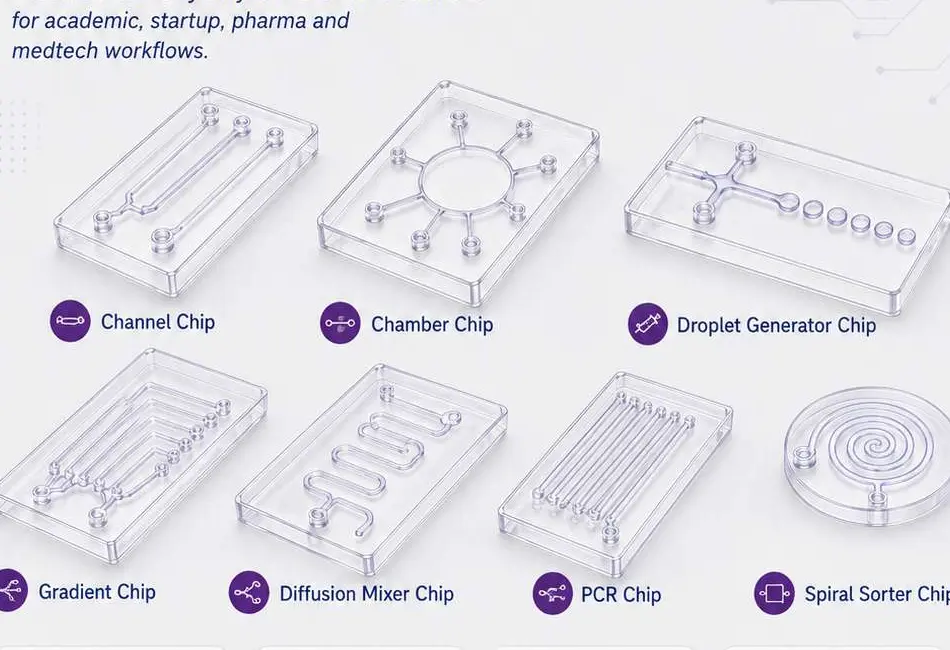
Selection of Acrofluidic microfluidic chip formats
Representative chip portfolioResearch use
Two clear paths

Conventional chips for foundational experiments · Specialised chips for defined workflows.

Conventional chips

Reliable geometries for everyday microfluidics.

Use these flexible starting points for flow characterisation, mixing, incubation, microscopy and droplet research. Dimensions can be adapted to the study.

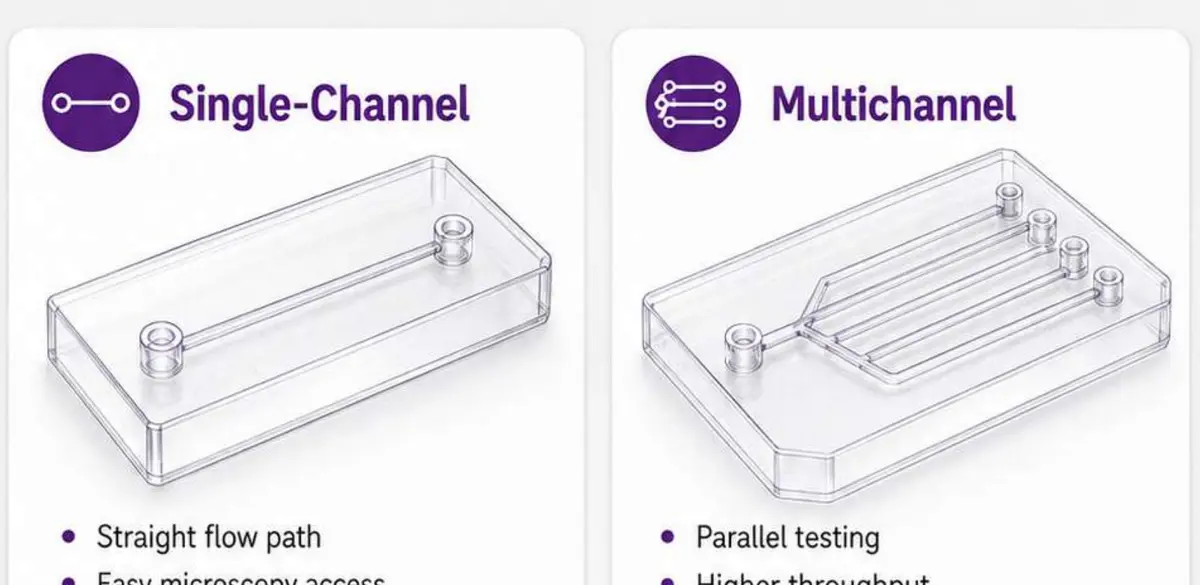
Single and multichannel chip designs cropped from the Acrofluidic catalogue
Conventional · 01

Channel chips

Direct and parallel flow paths for mixing, perfusion, transport studies and microscopy.

Indicative dimensions
  • Single channel: 200–1000 µm width and depth
  • 1 inlet · 1 outlet
  • Multichannel: 2–8 channels
  • 200–800 µm width · 200–1000 µm depth
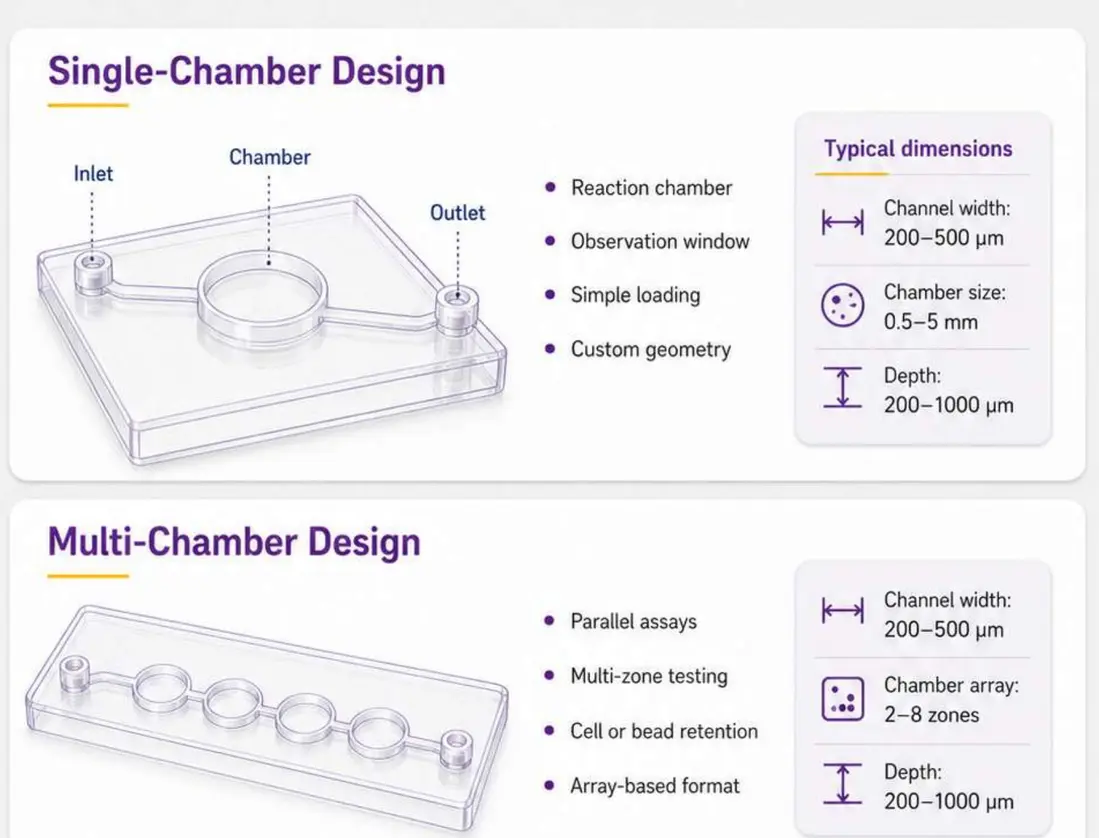
Single and multichamber chip designs cropped from the Acrofluidic catalogue
Conventional · 02

Chamber chips

Defined observation and incubation zones for trapping, parallel assays and cell studies.

Indicative dimensions
  • Channel width: 200–500 µm
  • Chamber width: 0.5–5 mm
  • Depth: 200–1000 µm
  • Multichamber formats: 2–8 zones
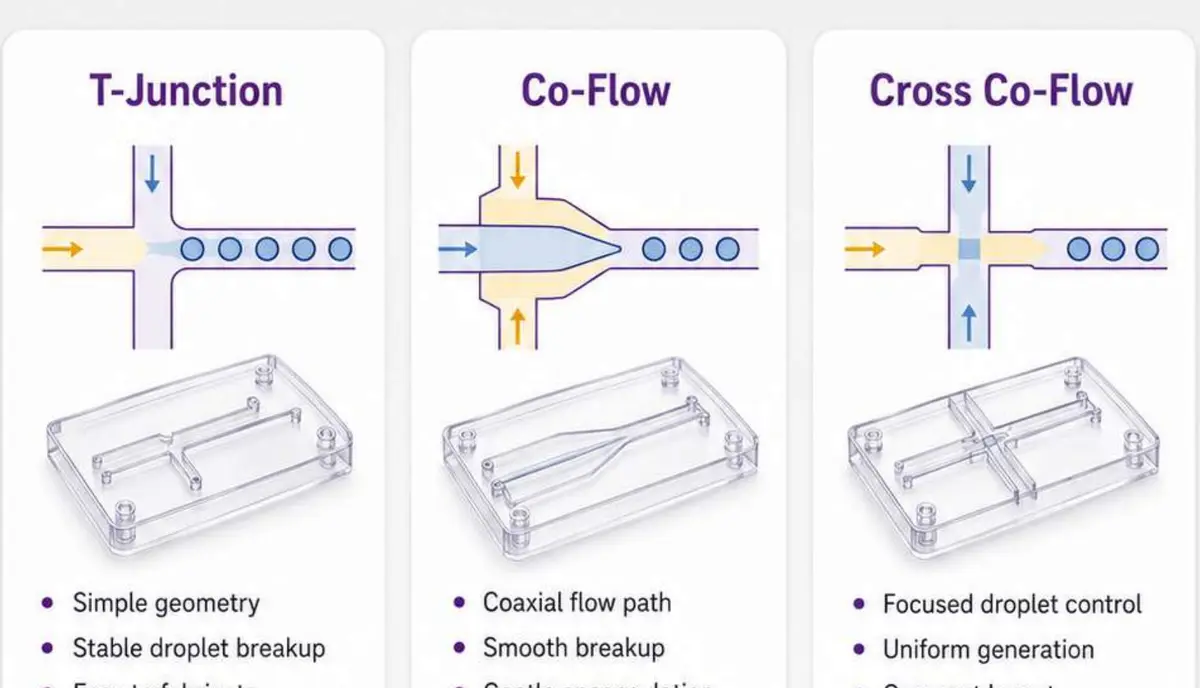
Droplet generator chip designs cropped from the Acrofluidic catalogue
Conventional · 03

Droplet chips

T-junction, co-flow and cross co-flow designs for emulsions, encapsulation and reaction partitioning.

Indicative dimensions
  • T-junction / co-flow: 200–500 µm width and depth
  • Cross co-flow width: 200–400 µm
  • Cross co-flow depth: 200–500 µm

Specialised chips

Purpose-built around a defined assay.

Each design below is taken directly from the supplied Acrofluidic chip catalogue and paired with its intended workflow.

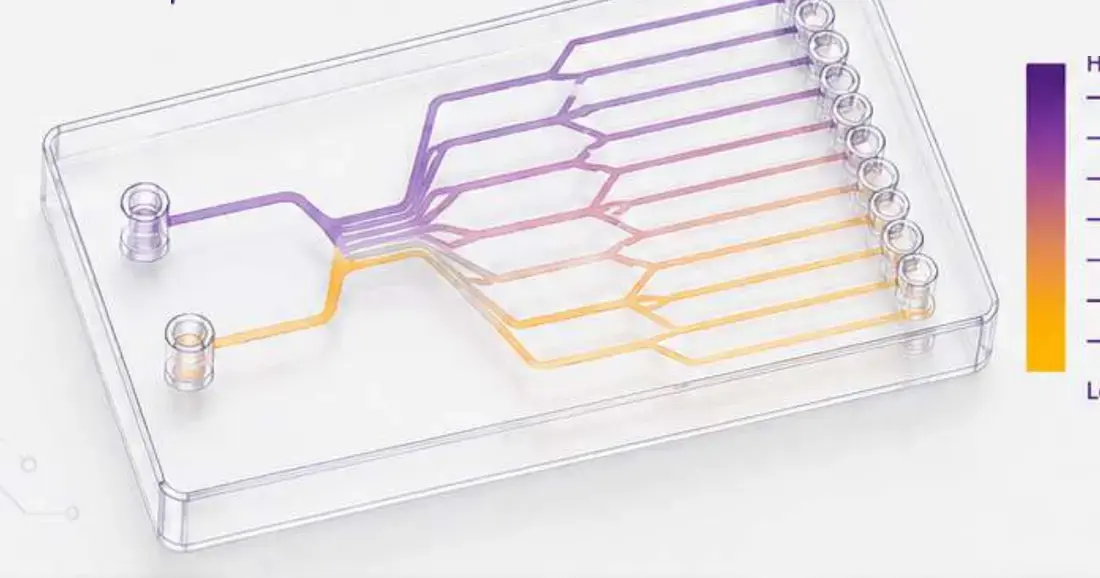
AcroGradient microfluidic chip design cropped from the Acrofluidic catalogue
Specialised · Gradient

AcroGradient

Creates stable concentration gradients with low sample use and multiple outlets.

Dose responseChemotaxisMedia optimisation

Three-layer acrylic · 200 µm+ channel depth · custom gradient layouts

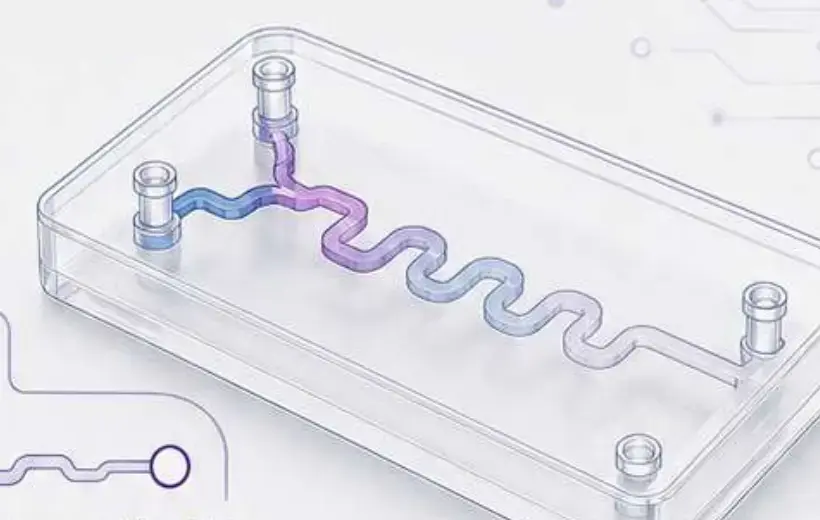
AcroDiffusion microfluidic chip design cropped from the Acrofluidic catalogue
Specialised · Diffusion

AcroDiffusion

Uses laminar diffusion for controlled mixing within a defined observation zone.

Reagent mixingAssay preparationFlow characterisation

Three-layer acrylic · 200 µm+ channel depth · custom inlet layouts

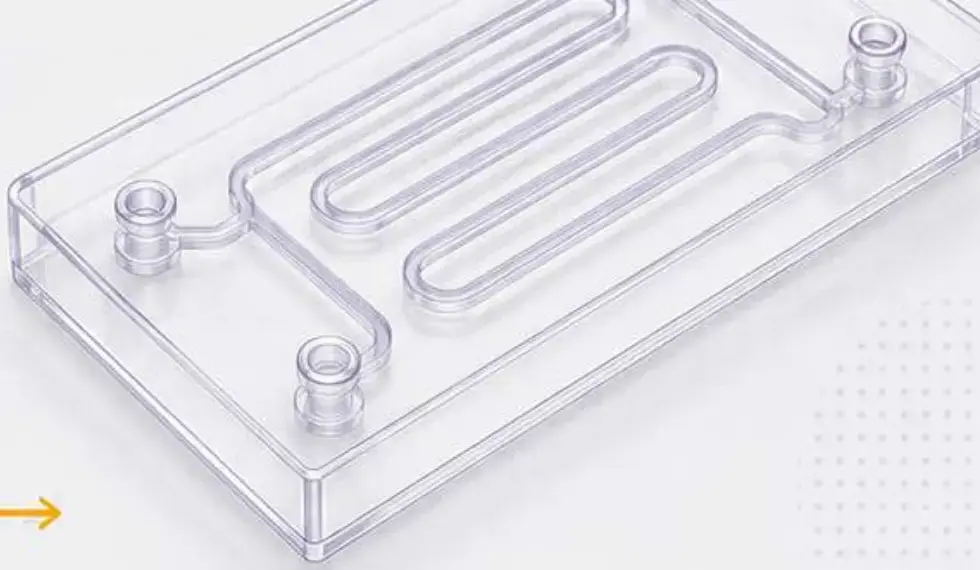
AcroPCR continuous-flow chip design cropped from the Acrofluidic catalogue
Specialised · Amplification

AcroPCR

A continuous-flow meander designed for low-volume thermal cycling research.

PCR researchAmplificationThermal studies

Three-layer acrylic · 200 µm+ channel depth · external thermal control

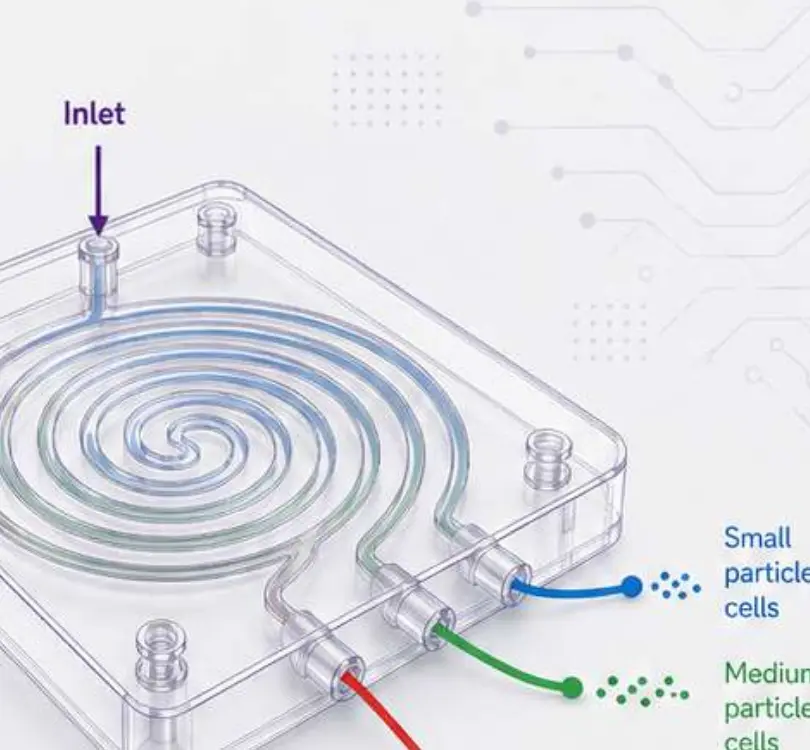
AcroSpiral cell separation chip design cropped from the Acrofluidic catalogue
Specialised · Separation

AcroSpiral

A curved-channel architecture for continuous, label-free size-based separation research.

Cell sortingParticle separationSample preparation

Three-layer acrylic · 200 µm+ channel depth · custom outlet configuration

Chip design images are cropped from the supplied Acrofluidic Microfluidics Chip Brochure. Final dimensions and materials are confirmed during technical review.

Custom chip development

Translate a workflow into geometry.

Begin with the sample, physical mechanism and readout. We then refine the architecture around your experimental constraints.

01

Requirements

Define sample, target, flow range, reagents and observation method.

02

Design

Select geometry, interfaces and materials for the intended experiment.

03

Fabricate

Produce and inspect the chip against the agreed design.

04

Deliver

Provide the device with the technical information needed to begin evaluation.

Have a chip design in mind?

Send the application, target dimensions and sample constraints. We’ll help identify a suitable starting point.

Request a technical discussion