Sample handling
Controlled microfluidic paths manage low-volume biological samples.

MIOPC™
A planned microfluidic platform for CTC enrichment, enumeration and imaging in longitudinal cancer treatment-monitoring research.
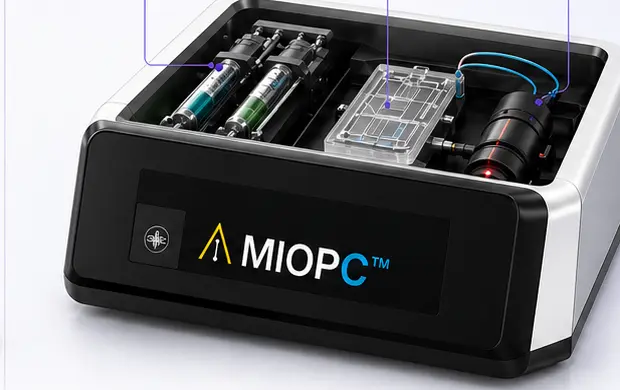
Blood-based CTC enrichment, enumeration and imaging for treatment-monitoring research.
Why integrate?
Rare-cell work can involve multiple instruments and manual transfers. MIOPC™ is being developed to connect core steps within a compact workflow, with the aim of improving consistency and preserving cells for visual analysis.
Controlled microfluidic paths manage low-volume biological samples.
An immunomagnetic research workflow concentrates candidate target cells.
Planned imaging supports enumeration and cell-level review.
Core workflow
Immunomagnetic enrichment of circulating tumour cells in blood samples using droplet microfluidics.
Bring antibody-conjugated immunomagnetic beads into contact with candidate CTCs.
Provide controlled time and droplet conditions for bead–cell binding.
Use a magnetic field to retain bead-bound target cells and reduce background.
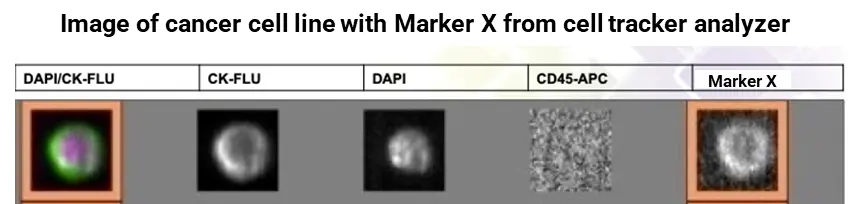
Image, count and review enriched cells using optical and fluorescence methods.
Droplet microfluidics brings the blood sample, reagents and cells together.
Antibody-conjugated magnetic beads support selective enrichment.
Optical detection and CTC imaging provide measurable cell-level observations.
Research outputs
Planned architecture
These visuals communicate the intended product direction. Final industrial design, specifications and clinical performance are still under development.
A compact housing concept for fluid handling, magnetic enrichment and optical observation.
Concept image. Configuration and specifications may change.
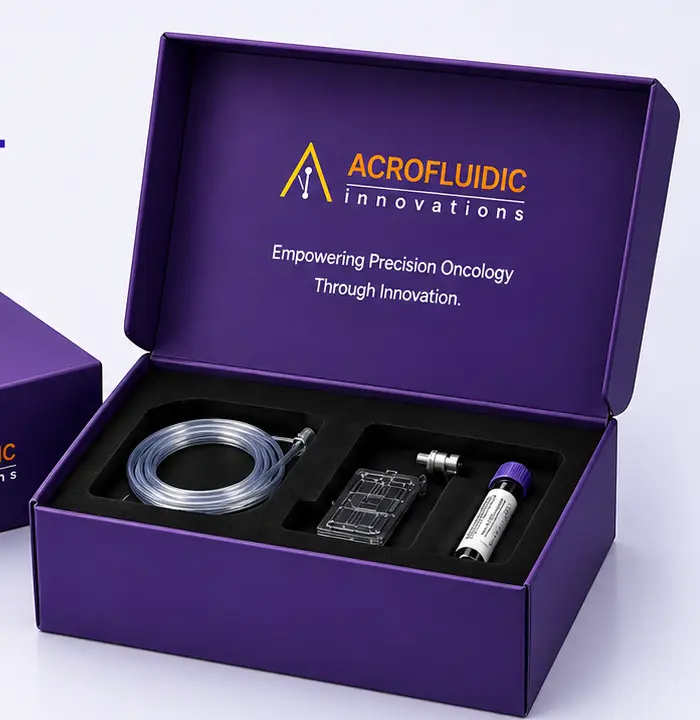
Cartridge and reagent components envisioned for repeatable sample preparation and processing.
Concept image. Not a currently marketed clinical kit.
Early analytical results
Known quantities of cultured breast cancer cells were introduced into controlled samples and processed using the early immunomagnetic workflow.
818 ± 28 cells recovered from 1,000 spiked cells.
893 ± 32 cells recovered from 1,000 spiked cells.
Interpretation: these preliminary results describe recovery under a controlled spiking protocol. They do not establish clinical sensitivity, specificity, patient validation, treatment-response prediction or clinical utility.
Prototype evidence
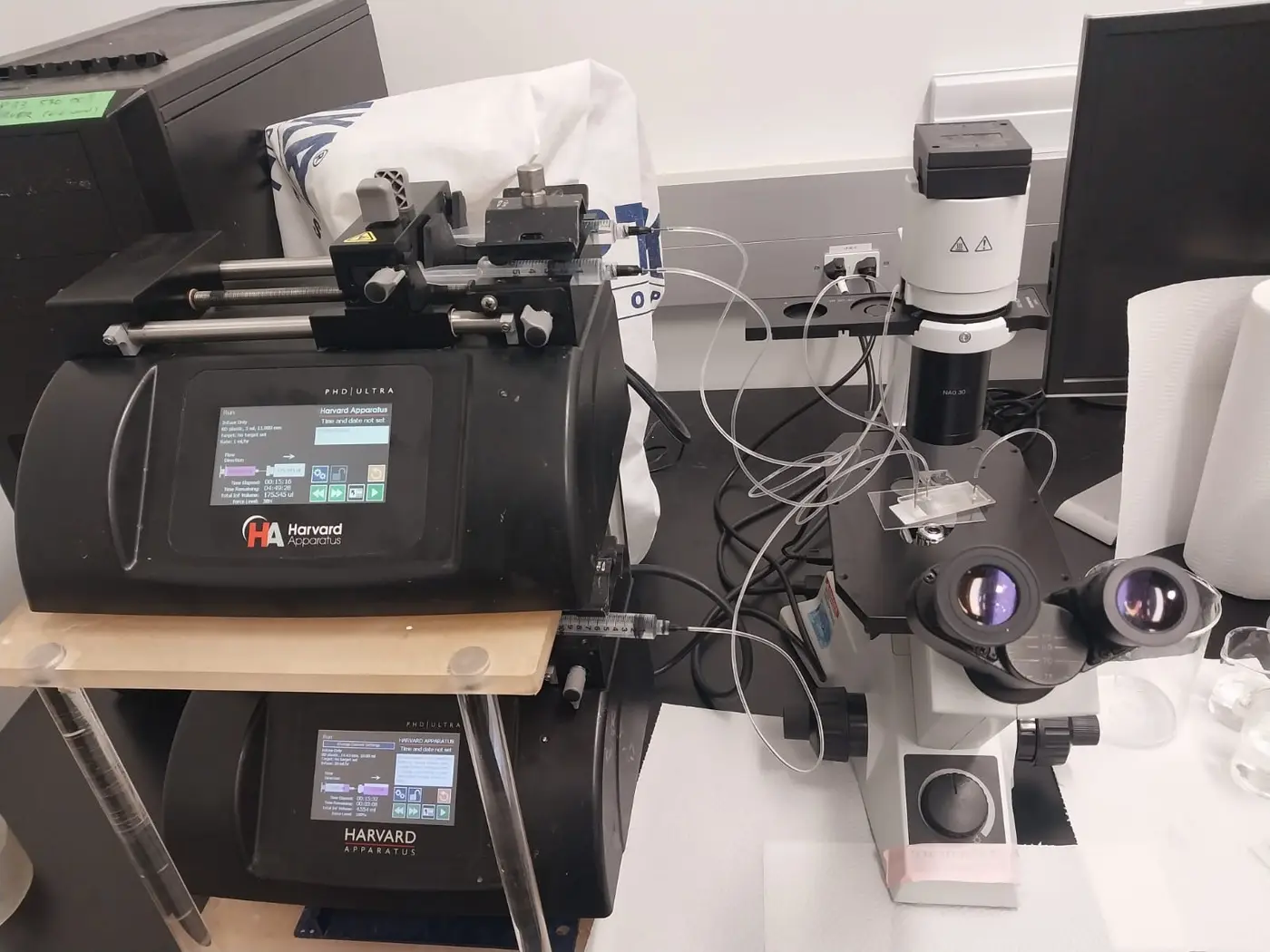
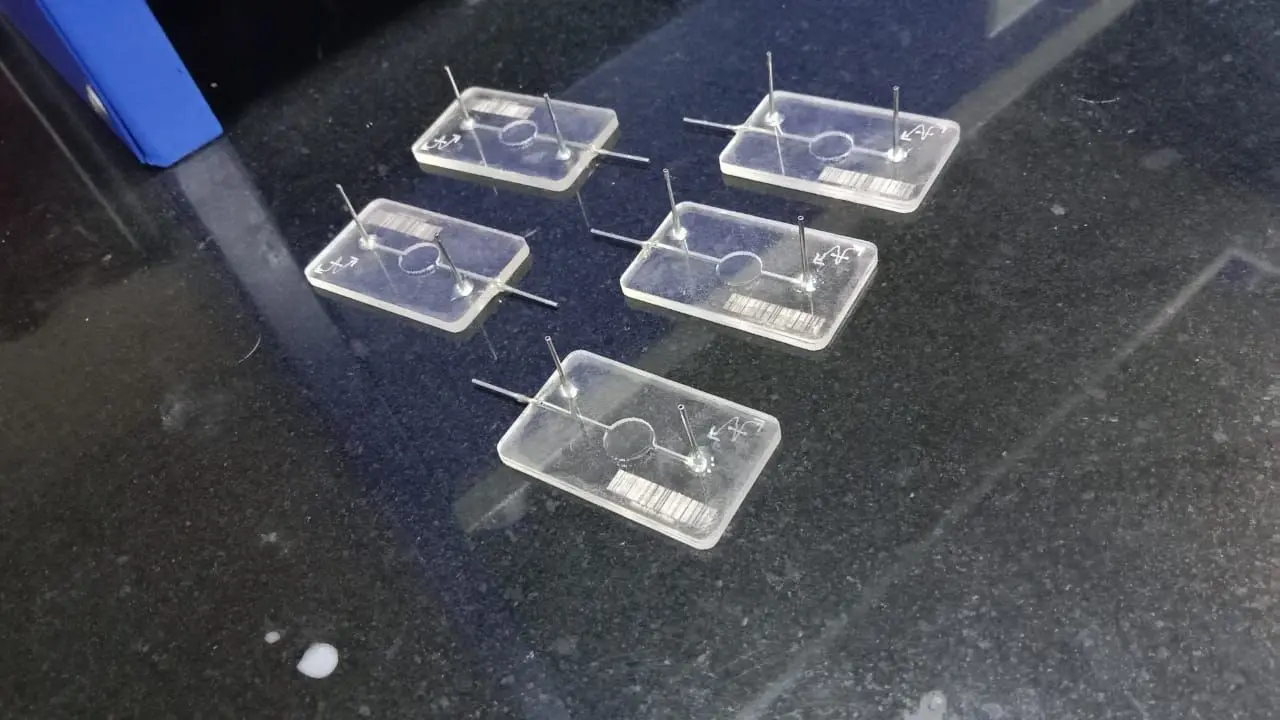
Laboratory photographs are shown separately from concept renders so the present development stage remains clear.
Development status
The pathway progresses from analytical repeatability toward appropriately designed clinical research.
Expand analytical runs, controls and operating-condition characterisation.
Assess recovery and background effects in increasingly representative samples.
Connect enrichment, fluid control and optical observation in one workflow.
Evaluate performance and utility with partners under approved study protocols.
Research-stage platform
MIOPC™ is under development for research use. It is not cleared for diagnosis, treatment selection or patient management.
We welcome conversations with oncology researchers, hospitals, translational labs and technology partners.