Simple sampling
A blood sample can be collected at planned clinical visits.

Liquid biopsy research
We are exploring CTC enrichment and imaging as a longitudinal research signal—designed to complement established cancer care.
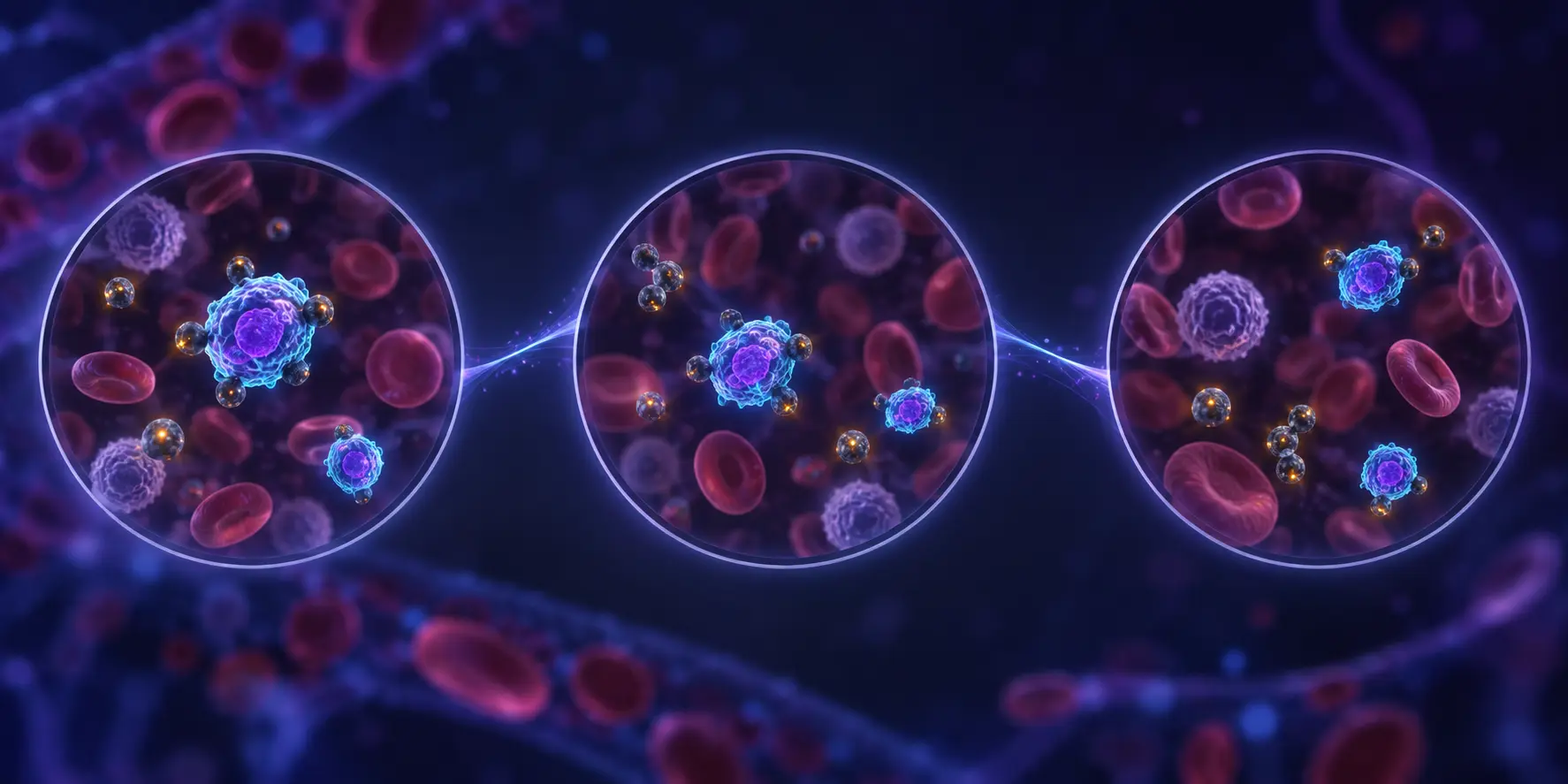
After diagnosis: monitoring treatment response research—not population screening.
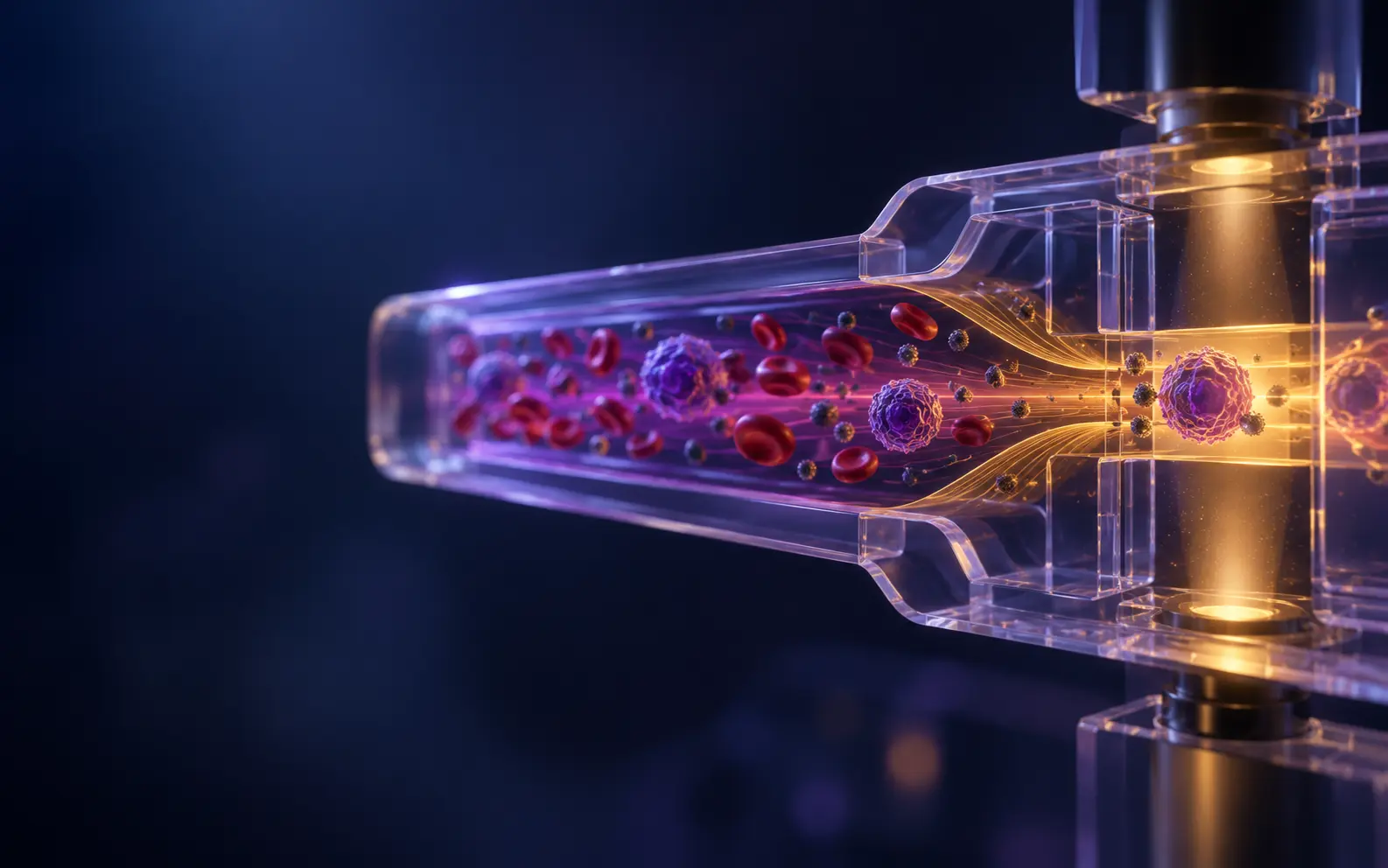
What is a liquid biopsy?
A liquid biopsy examines blood or another body fluid for cancer-related material. It may look for tumour DNA, RNA, proteins or whole circulating tumour cells. Our work focuses on CTCs: rare cancer cells that have entered the bloodstream.
A blood sample can be collected at planned clinical visits.
Baseline and follow-up samples can be compared during treatment.
CTCs can be counted and imaged to study changes in intact tumour-derived cells.
Liquid biopsy does not replace tissue biopsy, imaging, pathology or a clinician’s assessment.
Why follow CTCs?
A single result is a snapshot. Repeated CTC measurements may help researchers observe whether the cell count or cell features change during treatment, then compare that trend with scans, pathology, blood markers and clinical findings.
Measure CTCs before or at the start of treatment to create a reference point.
Follow whether CTC numbers or visible features rise, fall or remain stable.
Study whether the CTC trend agrees with imaging, tumour markers and the patient’s clinical course.
Longitudinal study concept
Establish a pretreatment research reference.
Collect at protocol-defined treatment stages.
Enrich rare cells with a consistent workflow.
Enumerate and image candidate CTCs.
Relate trends to standard clinical data.
A complementary signal
No single test explains the whole disease. CTC information may add a cell-based view alongside established evidence, helping researchers build a more complete longitudinal picture.
Established information
What it commonly shows
What CTC research may add
Where a tumour is and how its size changes.
A blood-based cell trend between scheduled scans.
Cancer type, grade and important tissue features.
Intact tumour-derived cells that can be counted and imaged repeatedly.
Levels of selected proteins or other molecules.
A cell-based signal that may change differently from soluble markers.
Symptoms, examination findings and overall response.
An additional research measure to correlate with the patient’s course.
Important: CTC results should be interpreted together with validated tests and clinical findings. MIOPC™ is under development for research use and is not a standalone diagnostic test.
Personalised monitoring research
Serial cell-level observations could help researchers investigate why patients with similar diagnoses may follow different treatment trajectories.
Our objective is to support research into more informed, patient-specific monitoring—not to automate treatment recommendations.
What the references suggest
Together, these references suggest that CTCs may provide important complementary information for patient treatment monitoring. CTC findings are most useful when interpreted alongside imaging, pathology, validated tumour markers and clinical assessment.
Share the cancer context, sampling schedule and research endpoint. We can explore technical fit together.